

Parenting 101: Parent-Child Roles
In part 1, we explored the three stages of development that your child should go through:
In their life, independent of you.
In their relationship with you.
These two are one and the same. The importance of detachment will be highlighted here to give you context. In this part, we will talk about boundaries in family systems and individuals.
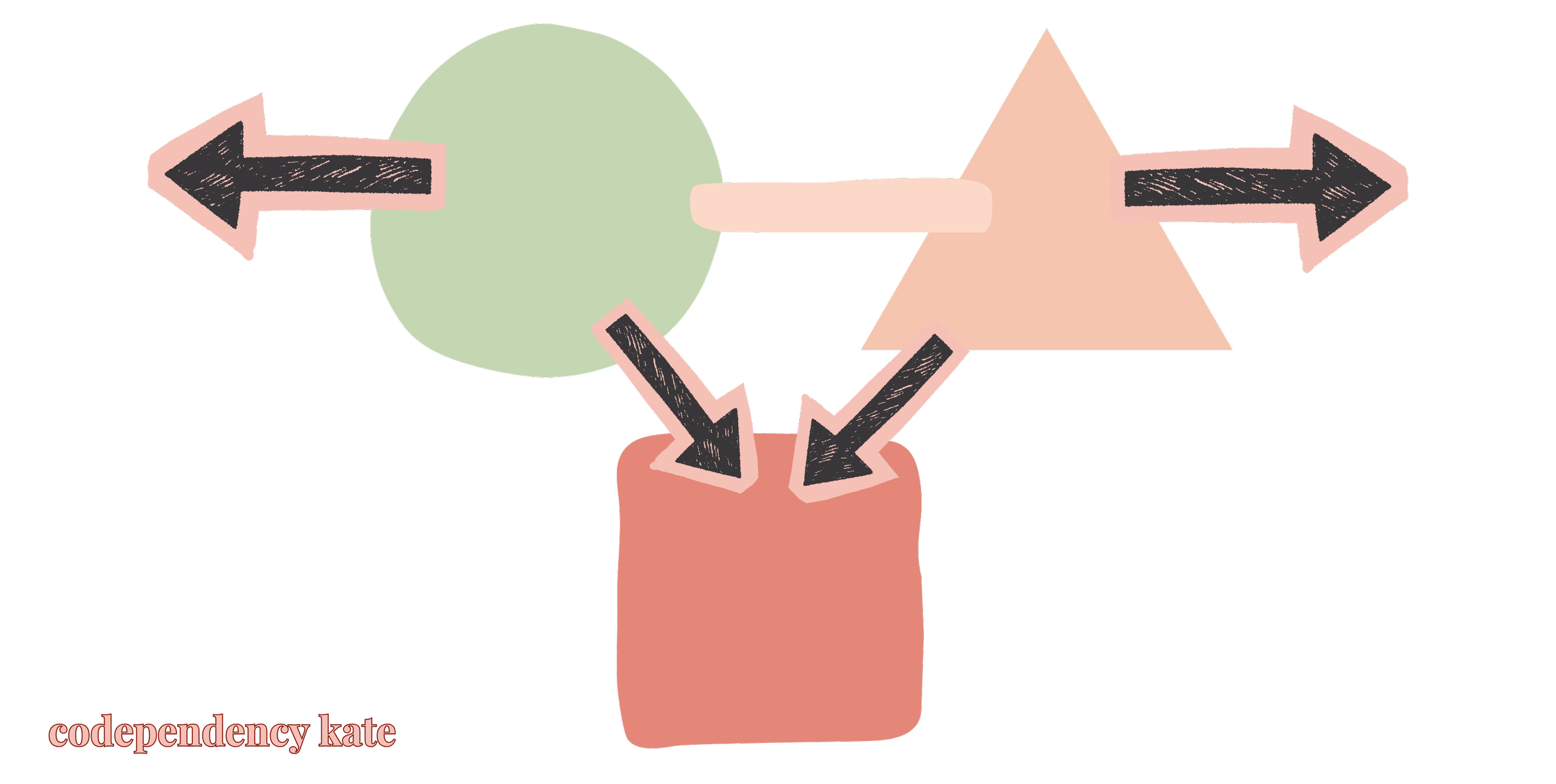
Genogram
First, let’s look at family systems. This is called a genogram. A genogram is a visual that helps you understand your role as a parent. This is the dad and this is the mom. We are using a typical heterosexual relationship here for simplicity’s sake, not to be exclusive.
Do you see that the parents are not at the same level as the child? This stays this way until parents pass away. This power dynamic, where parents remain in their position, lasts until they pass. It never changes. It evolves, it transforms, but ultimately parents are always up here, and children are always down there.
This does not mean from an authority or dictatorship perspective. Parents mess up detachment when they misinterpret this structure—when they think being “above” means having power and control. On the other end, they also mess up when the roles are reversed, and the children are placed above them. This is permissive parenting.
The way to understand this system is through leadership. It is not about power, not about authority. Simply leadership. Bottom line: parents are in control of the child’s environment and development.
Parents with adult children often ask, “But my kids are grown up now. Aren’t we on the same level?” The answer is no. Parents are always one life stage ahead of their children—biologically, neurologically, and developmentally. They are always further along. And I will die on this hill: this is true.
When parents step into their power as parents, and truly accept their leadership role, everything in the relationship with their child transforms. The reverse, however, is not true. When a child becomes an adult and matures into the leader of their own life, it does not transform the relationship with the parent the way it does when the parent steps into leadership. Parents need to accept their leadership role—they are in it forever.
Now, where parents often go wrong in the detachment phase is when they themselves haven’t done their own work with their own parents. We see this often with estranged adult children. Parents will say, “I grew up and understood that my parents are human and made mistakes.”
But this is not an integrated point of view. They may have gone through development, but they haven’t done their emotional work. They haven’t learned from their parents’ mistakes in an integrated way. Otherwise, they would have empathy for their child, respect the detachment phase, and not be emotionally triggered by it. They might understand it cognitively, but not emotionally.
Parenthood is grief. If parents had done their own work, they would not carry the emotional charge that makes detachment feel so devastating.
Instead, what happens in most cases is that parents take it personally and feel rejected by their child. It feels like they are not valued as a person when their child detaches. This is because the parent is still stuck in the attachment phase. They have not moved through detachment themselves, so they cannot really connect with their child.
This harms the child deeply. The child ends up burdened with the parent’s unresolved emotional issues with their own parents. This leads to guilt and shame in the child, which often shows up as behavioral or emotional issues. They may find themselves in toxic relationships or repeating unhealthy patterns.
This happens subconsciously because parents have not led the way with awareness. As a result, children carry this pressure and responsibility without realizing it. They lose room for themselves in their own lives, and this comes out sideways in behaviors that don’t serve them—and that they don’t understand until they do their own work.
So what’s the most important thing for parents to learn?
The way children will learn detachment is by watching how you, as parents, live it out. That means:
You are living your life in a connected way. For example, in your marriage—if you are enmeshed or stuck in unhealthy patterns, you take responsibility for your part. That is the first thing to work on: your own relationships, your own patterns, and how this plays out in your life.
You lead by example, not just in your personal life, but also in how you respond to your kids when they bring their own issues to you. (We will explore this more in part 3.)
This is how parents reinforce their leadership role:
By leading by example—in their own life, with themselves, and with other people.
In the way they respond to their child, to each other, and to others.
By helping their child with their own issues from a detached, grounded parental role.
These three things must align and be in place:
How parents deal with their own marriage.
How they are with themselves: caring for their health, standing up for themselves, being kind and compassionate to themselves.
How they show up with others—partners, friends, extended family, work.
This looks like:
Living aligned in your own life.
Responding to your child in a grounded, connected way.
Helping your child with their own issues, without blurring the roles.
The main way parents screw up detachment is by taking things personally. When a child says or does something, parents respond as if the child is on their level, or as if they are friends. But children are never on the same level as the parent.
