If you're reading this, part of you may still be trying to decide whether what happened in your childhood "counts." Maybe your parents provided, showed up to games, and told people they loved you. Maybe it was "just" yelling, or "just" spankings, or "just" the way things were in your family, your church, or your culture. And yet something in you knows it wasn't okay.
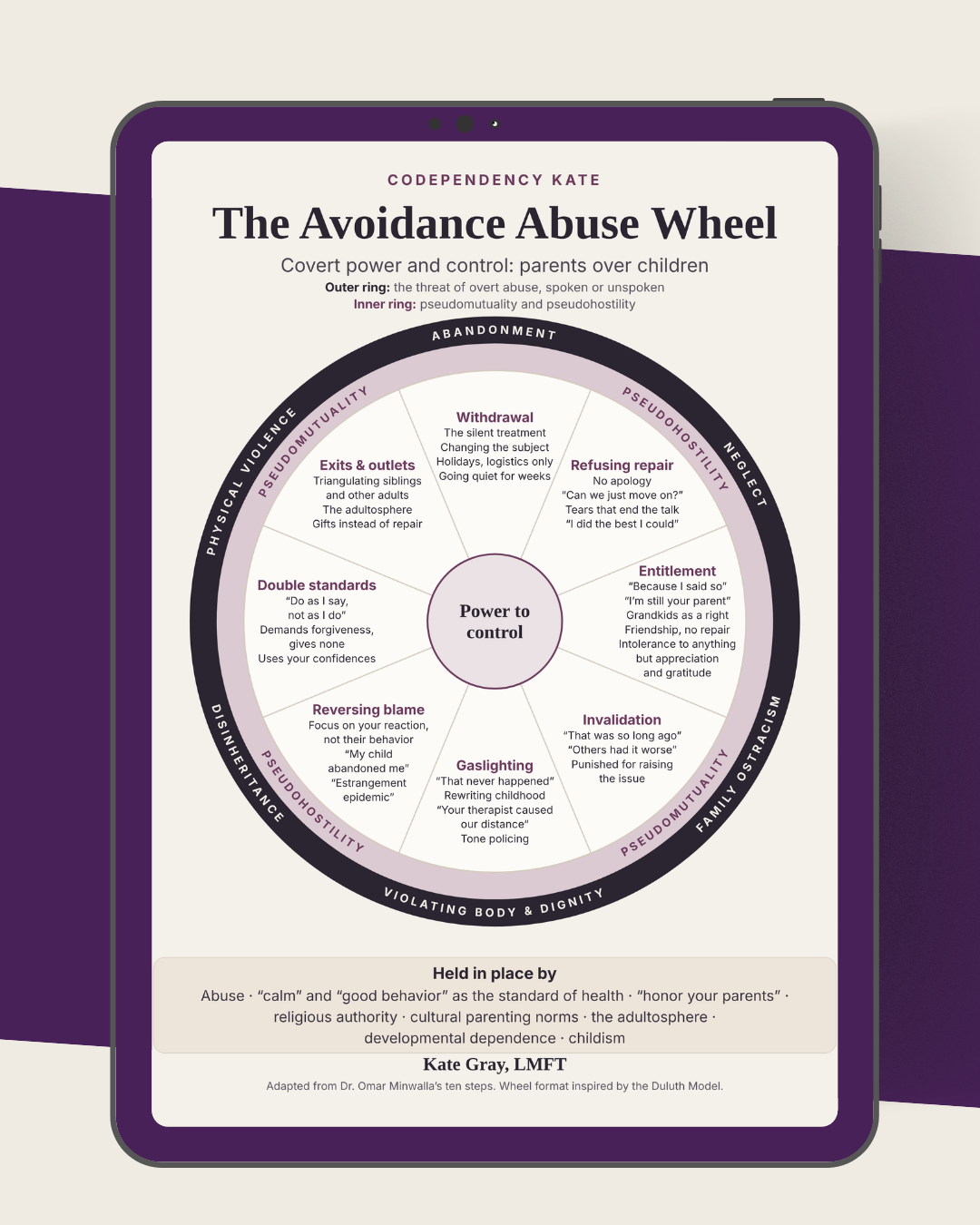
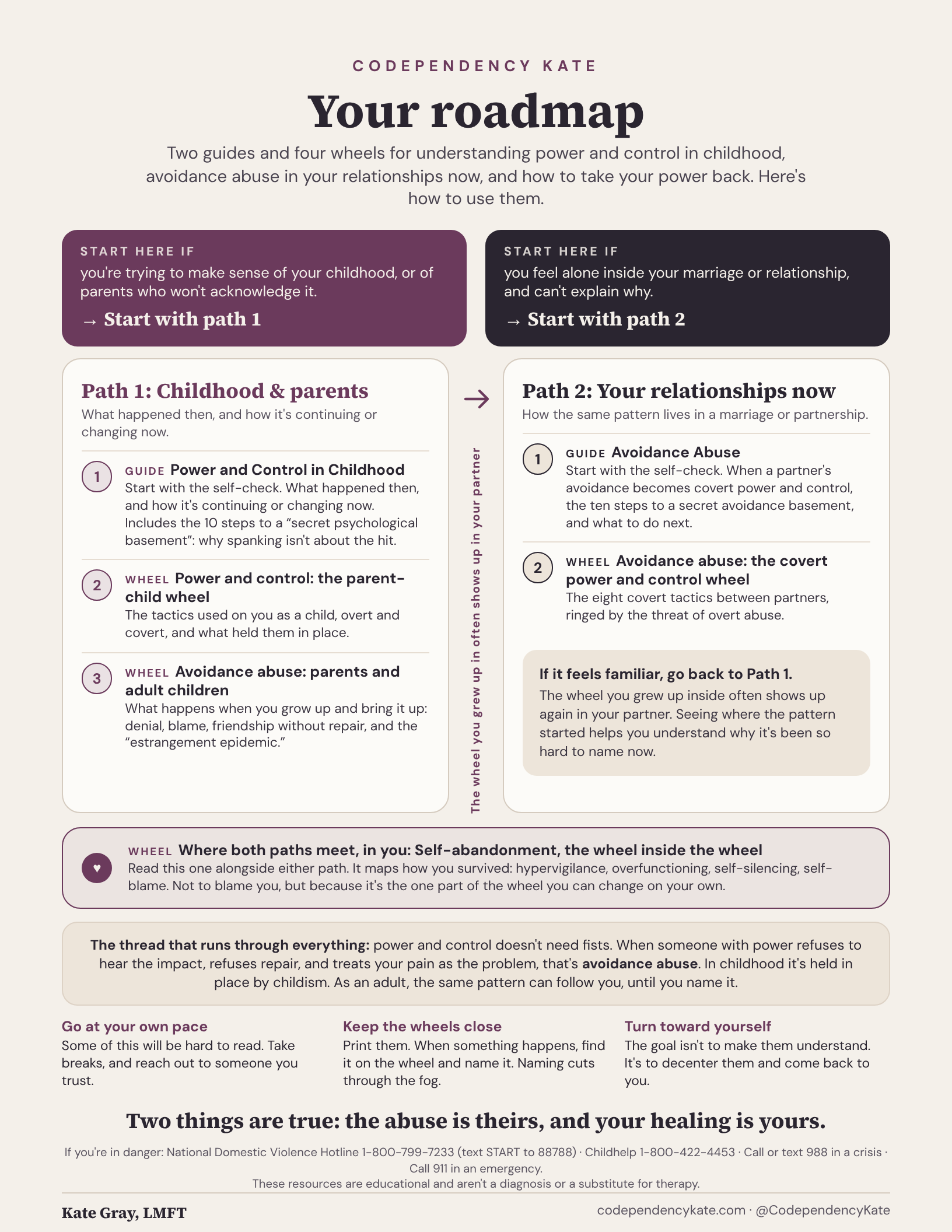
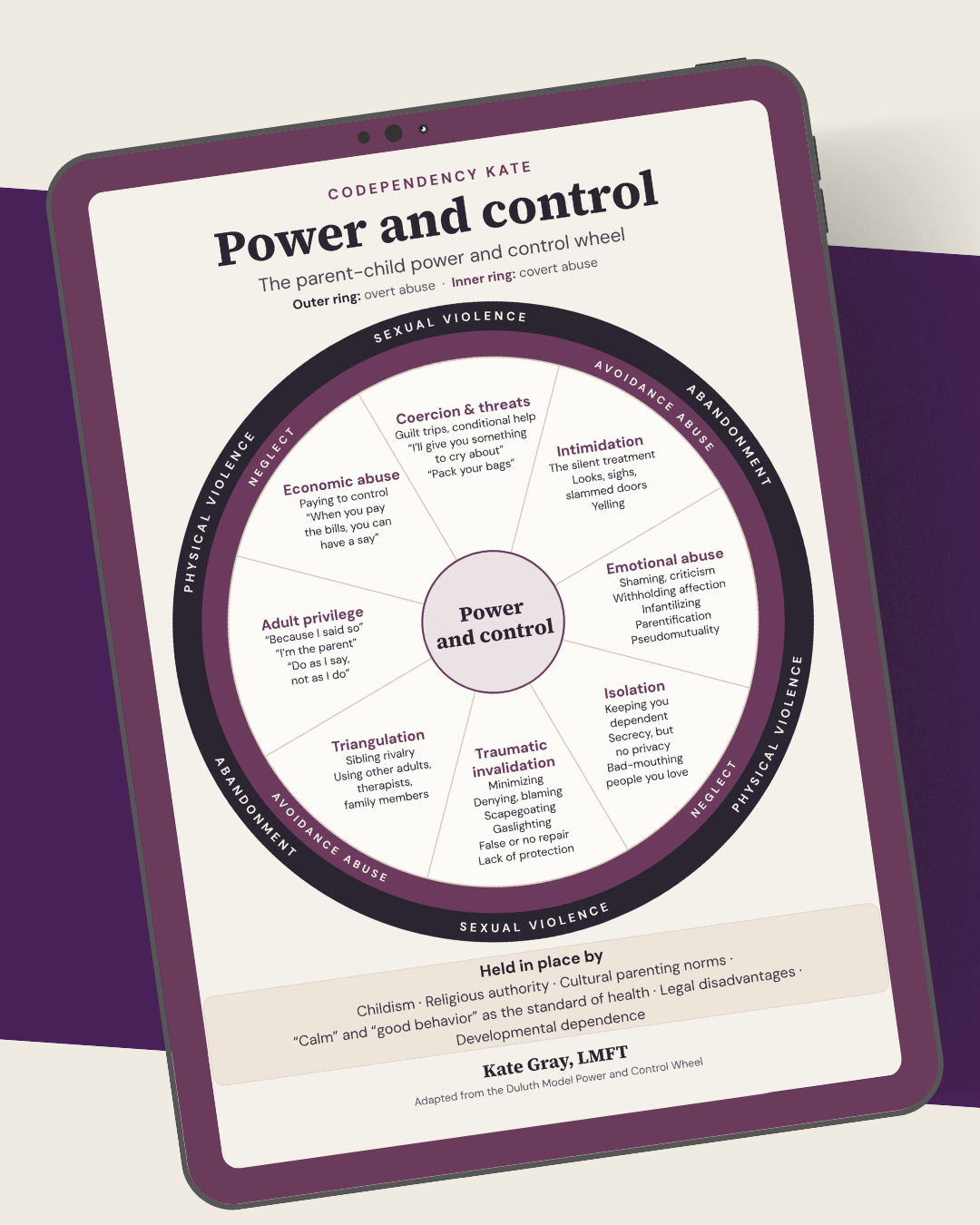
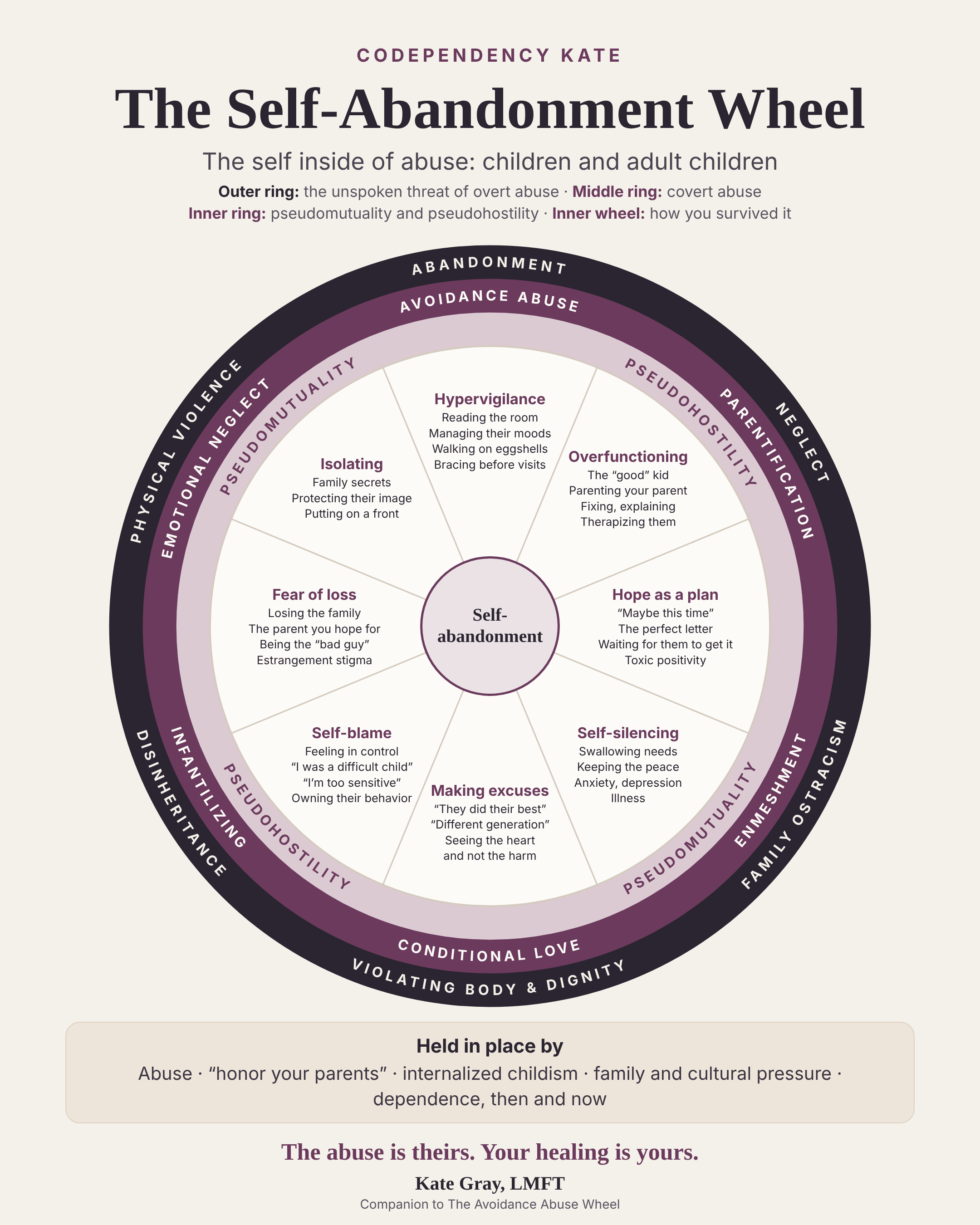
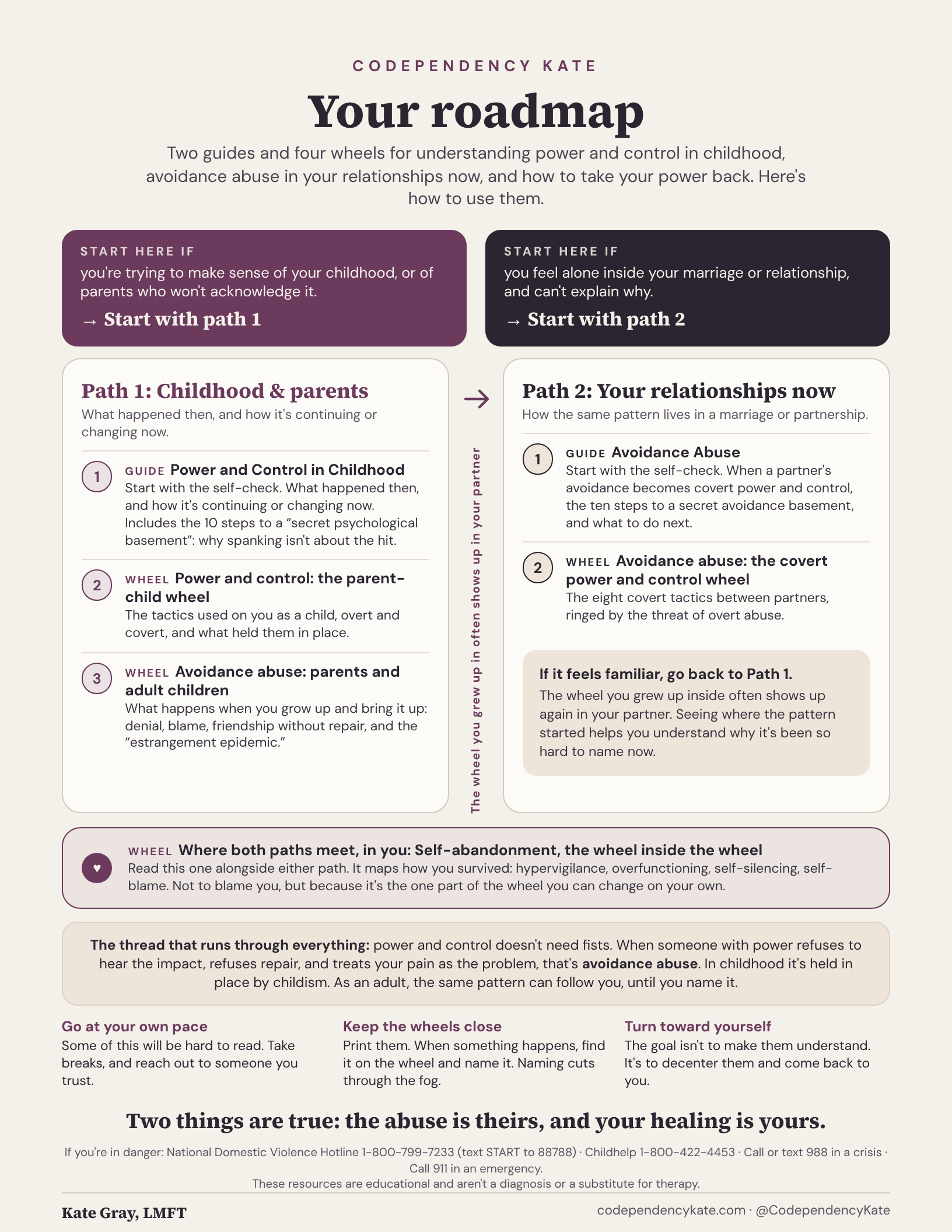
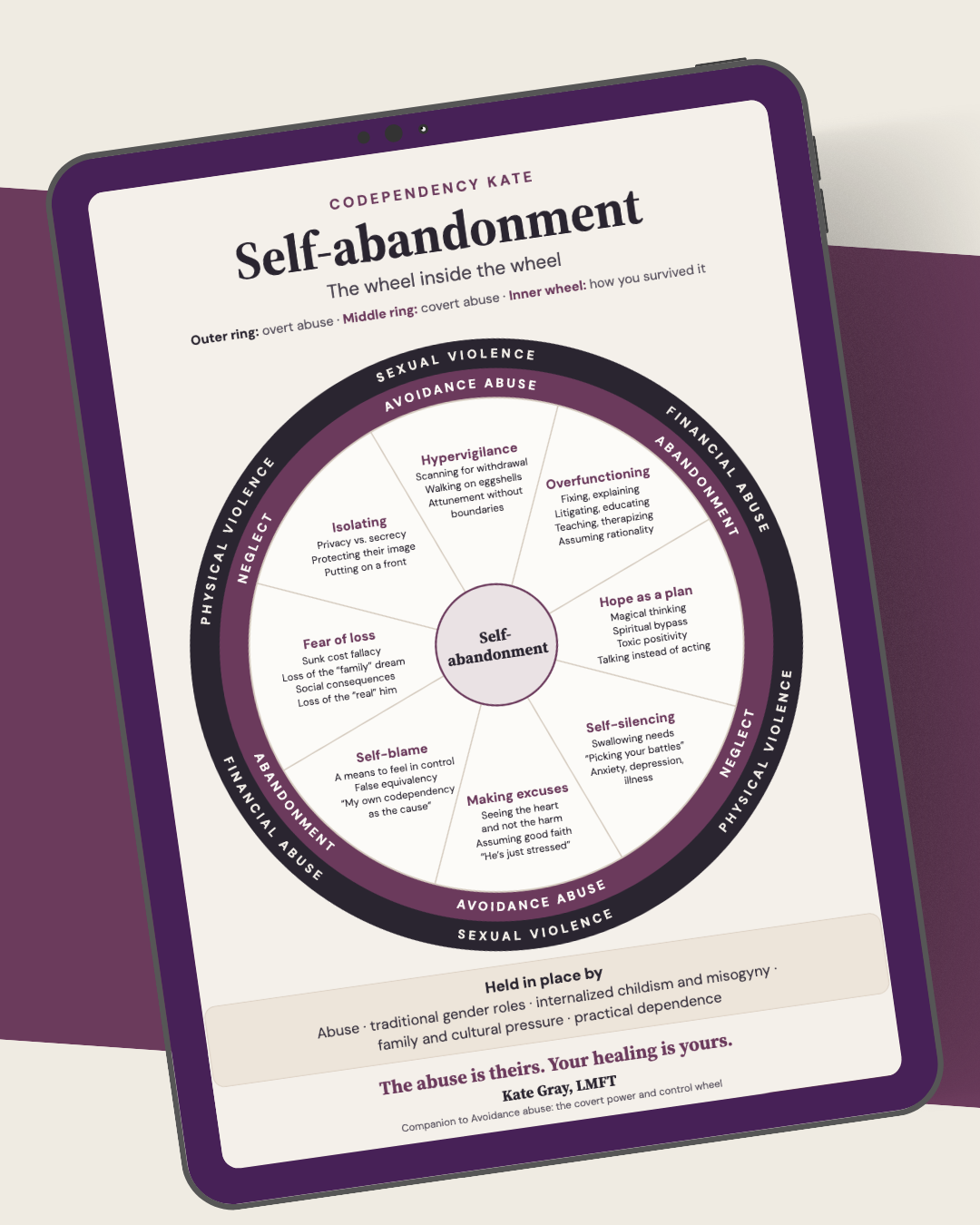
This guide is for you. It does two things. First, it explains how power and control can work between parents and children: the overt abuse everyone recognizes, the covert abuse that's harder to name, and the beliefs that keep both in place. Second, it shows how that same control can continue, or change shape, once you're an adult. Many parents:
Won't acknowledge what happened, no matter how many times or how carefully you bring it up.
Keep blaming you, for your feelings, your "attitude," your therapist, or the distance between you.
Change their tune when you turn 18, suddenly wanting equality and friendship, while the covert tactics stay exactly the same.
It will help you name what happened then, see what's still happening now, and figure out what to do next.
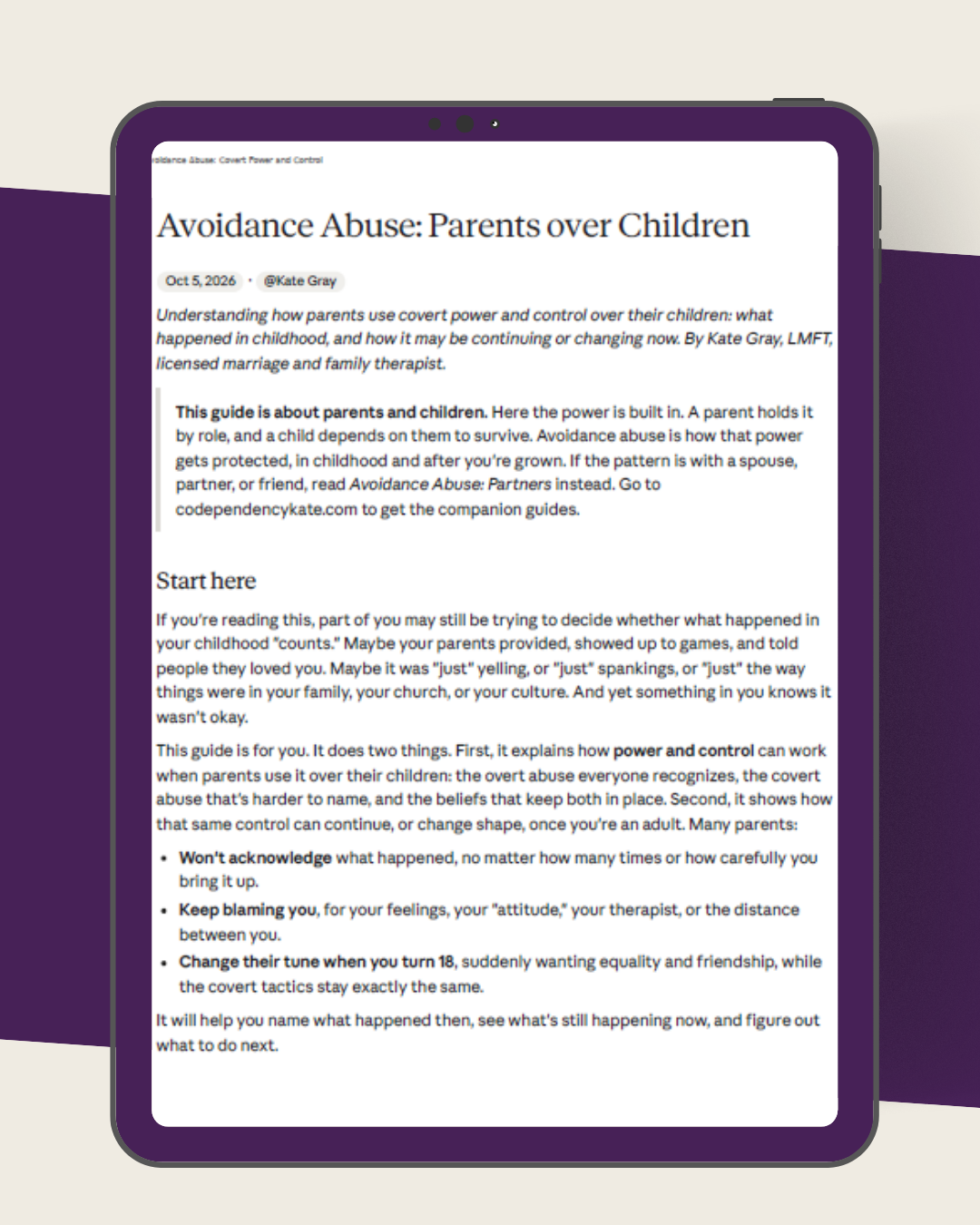
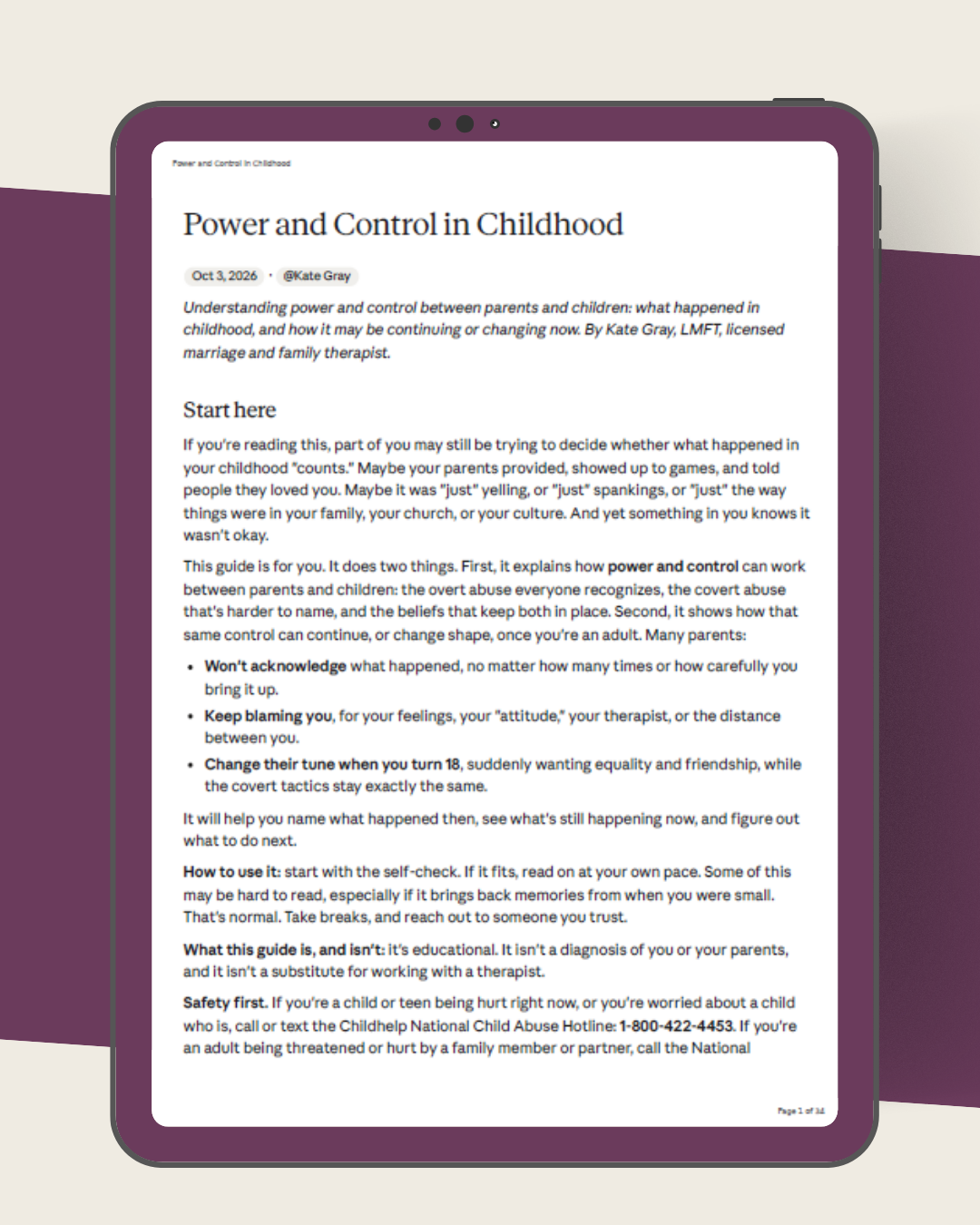
If you're reading this, part of you may still be trying to decide whether what happened in your childhood "counts." Maybe your parents provided, showed up to games, and told people they loved you. Maybe it was "just" yelling, or "just" spankings, or "just" the way things were in your family, your church, or your culture. And yet something in you knows it wasn't okay.
This guide is for you. It does two things. First, it explains how power and control can work between parents and children: the overt abuse everyone recognizes, the covert abuse that's harder to name, and the beliefs that keep both in place. Second, it shows how that same control can continue, or change shape, once you're an adult. Many parents:
Won't acknowledge what happened, no matter how many times or how carefully you bring it up.
Keep blaming you, for your feelings, your "attitude," your therapist, or the distance between you.
Change their tune when you turn 18, suddenly wanting equality and friendship, while the covert tactics stay exactly the same.
It will help you name what happened then, see what's still happening now, and figure out what to do next.


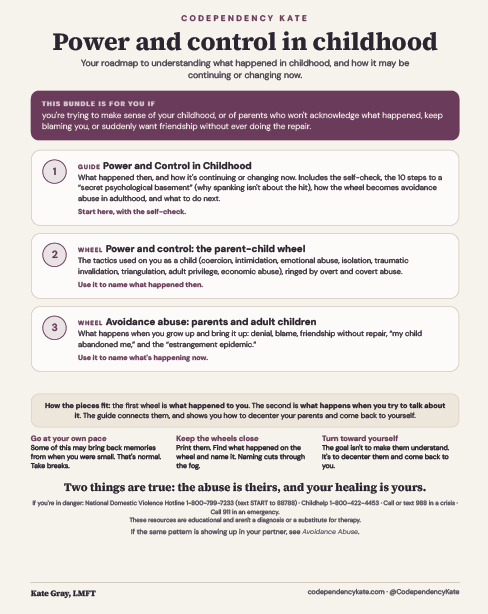 Image 1 of 6
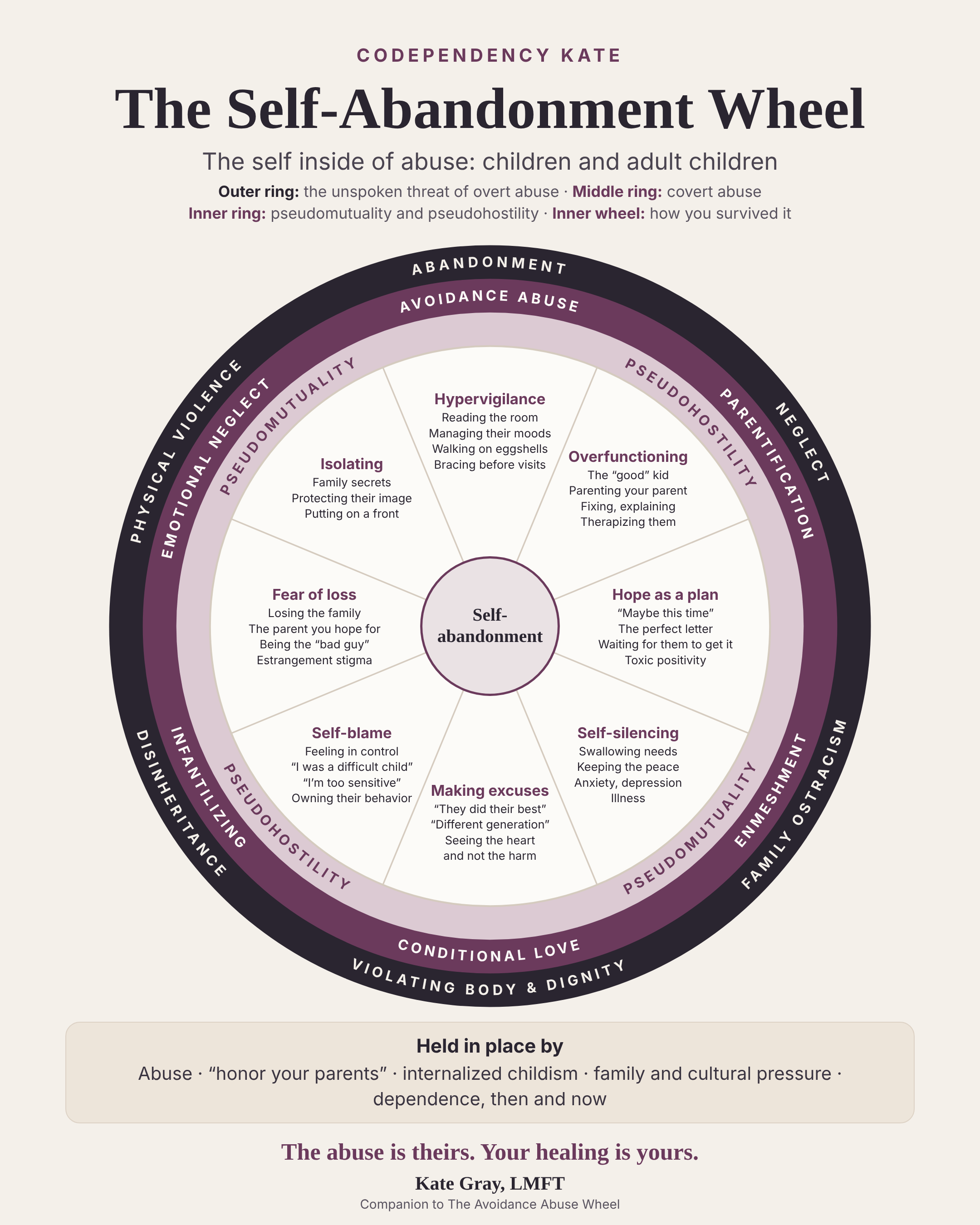 Image 2 of 6
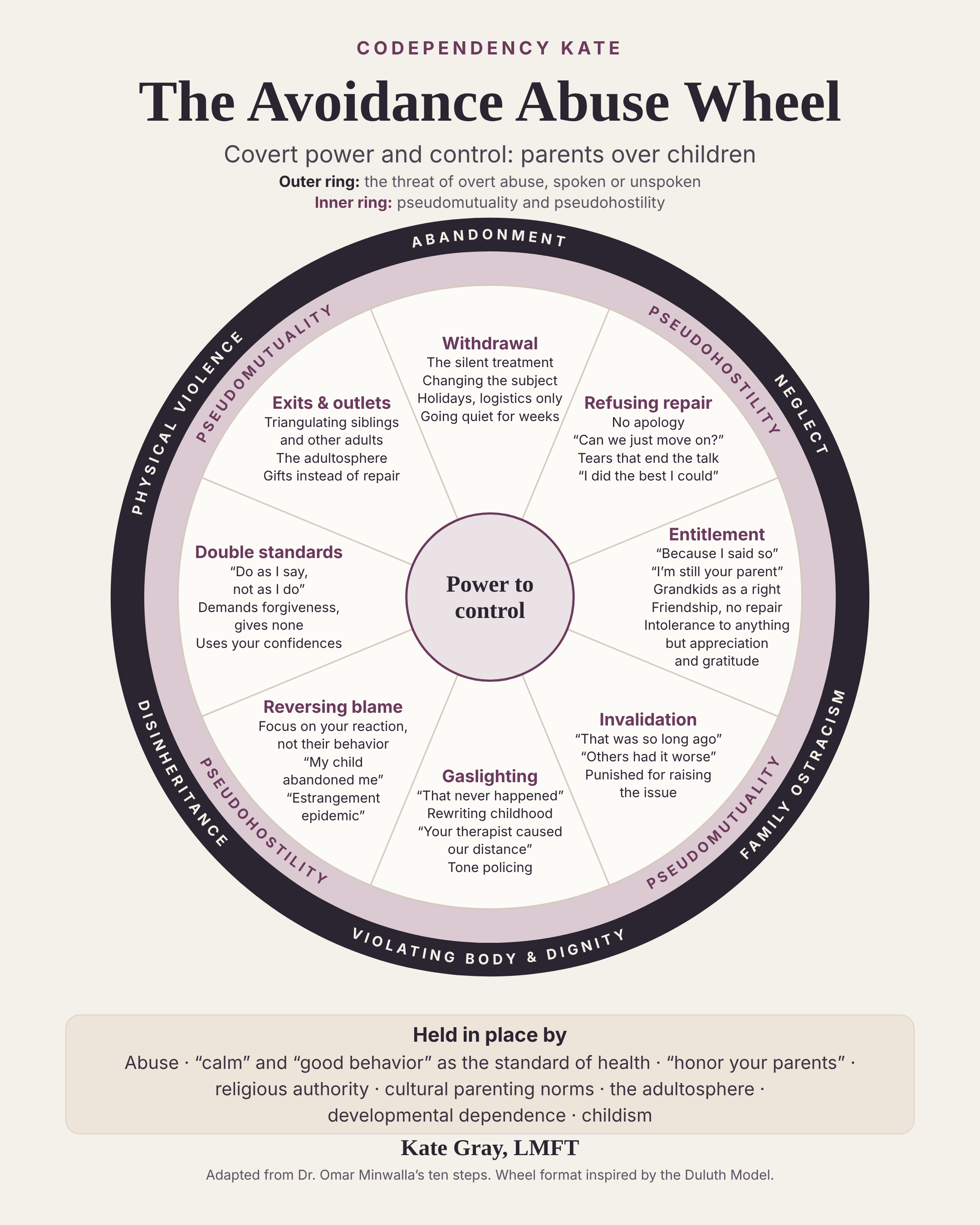 Image 3 of 6
 Image 4 of 6
 Image 5 of 6
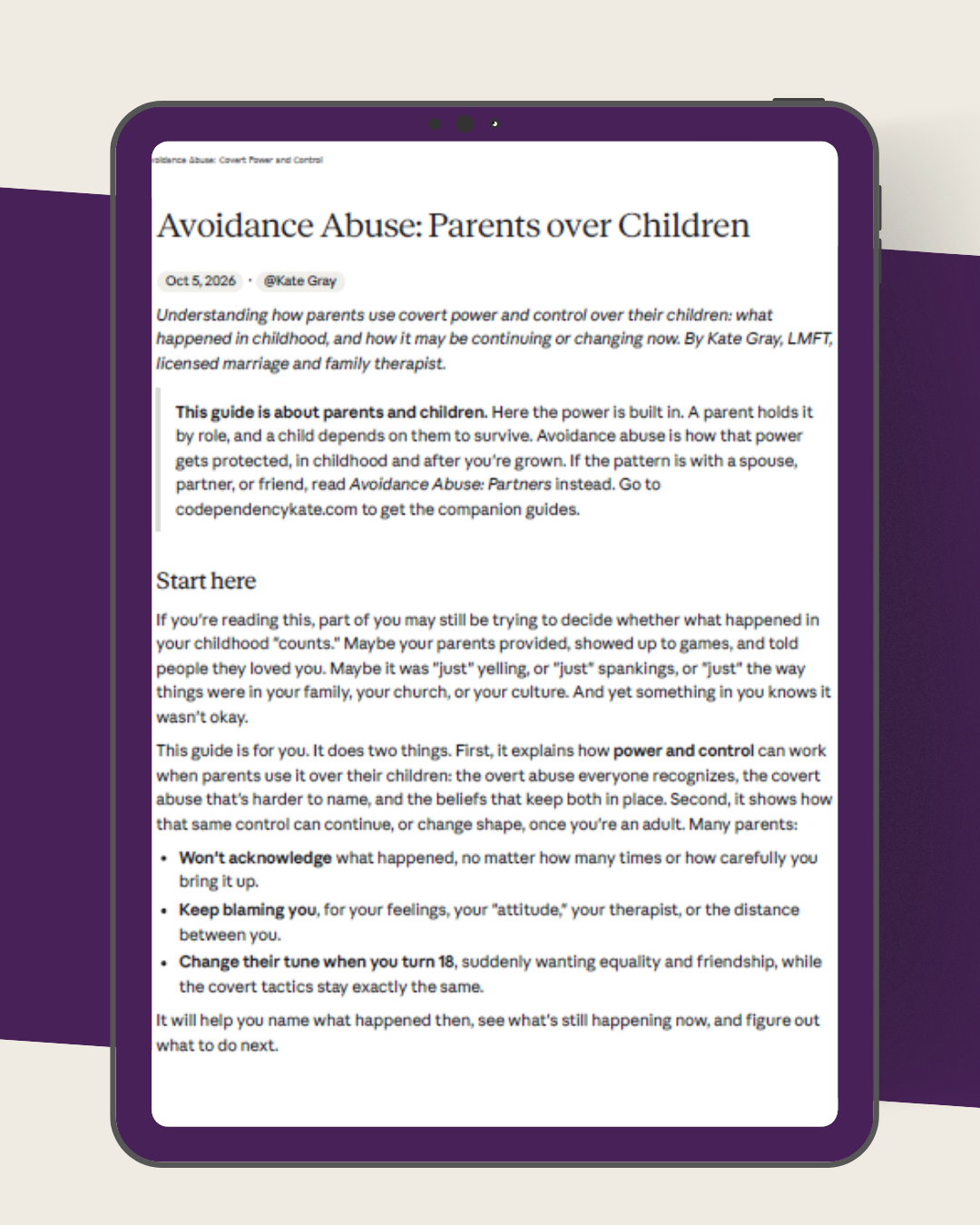 Image 6 of 6